































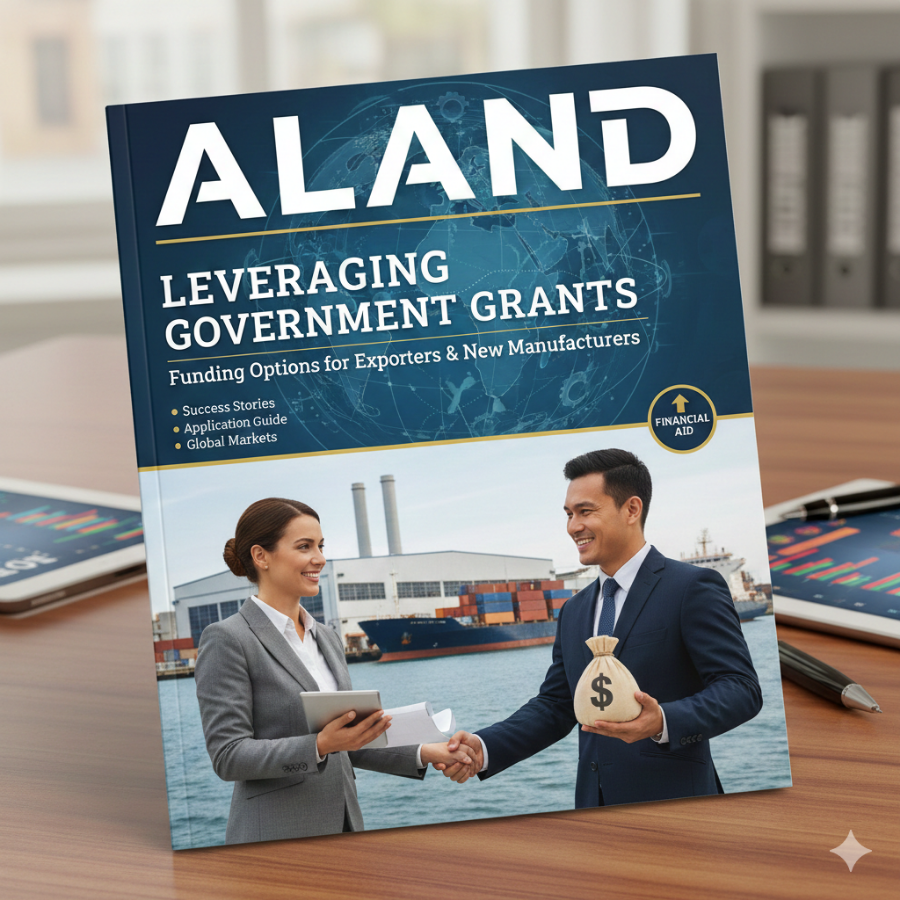
Many entrepreneurs starting in export or launching their first manufacturing operation overlook one of the biggest hidden advantages: free or low-cost money from government programs. Export grants, manufacturing incentives, and regional development funds can cover 20-50% of your startup or expansion costs — sometimes even more — without giving up equity.
Dr. Pooyan Ghamari, Swiss economist and international finance expert, regularly advises clients that “government grants are the closest thing to free capital in global trade.” In his experience working with European, GCC, and North American funds, the key is matching the right program to your exact business stage and location strategy.
Export Development Canada (EDC), the U.S. Small Business Administration’s STEP program, UK’s Department for Business and Trade grants, and the EU’s COSME and Horizon programs are currently releasing hundreds of millions every year specifically for exporters and new manufacturers. Several GCC countries, including UAE and UAE, have also launched “Economic Diversification” funds that pay up to 75% of machinery and setup costs for new factories.
Practical examples that actually happened in 2024–2025:
- A Turkish textile exporter received €380,000 non-repayable grant from the EU’s IPA III program to open to non-EU companies trading with Europe.
- A U.S. dietary supplement brand used combined federal + state grants totaling $620,000 to build a new GMP facility and start exporting to Canada and Mexico.
- A Vietnamese furniture manufacturer setting up a second plant in Serbia got €2.1 million from Serbia’s Development Agency plus tax holidays because the project created export-oriented jobs.
The trick is timing. Most programs work on quarterly or annual application windows. Missing one cycle can delay funding 6–12 months. Ghamari recommends building a “grant roadmap” the same day you start your company formation or factory site search.
Combine grants with immigration-through-investment pathways and the leverage becomes massive. Portugal, Greece, Spain, and several Caribbean nations let you fast-track residency or citizenship when you commit to job-creating projects — and government grants count toward your required investment amount. Suddenly your new manufacturing or export company becomes the vehicle for both profit and a Plan B passport.
Online and drop-shipping exporters are also eligible for many of these programs. The UK’s Export Support Service, Australia’s EMDG scheme, and Singapore’s Market Readiness Assistance grant all cover digital marketing, website localization, and e-commerce platform costs for businesses selling internationally — even if you never touch physical inventory.
10 Thought-Provoking FAQs
- Which countries currently offer the most generous grants for new exporters? Right now (2025), the Netherlands, Germany, Canada, Singapore, and the UAE top the list for speed and size. The Dutch “GO” subsidy can pay 50% of your foreign market entry costs up to €200,000 per project.
- How do I actually secure grant financing for international trade expansion? Start with your national export agency, then layer regional funds. Prepare a solid business plan, export sales forecasts, and job-creation numbers. Most decisions are made within 8–12 weeks.
- What are the fastest immigration pathways tied to export or manufacturing investment? Portugal Golden Visa (€500k factory or fund route), Greece (€250k–€400k in certain regions), and St. Lucia Enterprise Project ($3.5m with 50% grant offset possible) remain the quickest in 2025.
- Are drop-shipping and pure online stores eligible for export grants? Yes. Programs in Canada, Australia, UK, and Singapore explicitly include “services and digital exports.” You just need proof of international revenue.
- How do exporters reduce global shipping costs when scaling fast? Use consolidated grant-funded fulfillment centers (many programs pay for warehouse setup), negotiate zone-to-zone transfers in free trade areas, and switch high-volume lanes to sea + rail instead of air.
- What compliance and tax issues hit hardest when manufacturing or exporting cross-border? Transfer pricing documentation, VAT registration in customer countries, and tariff classification errors. Hire a customs broker early — one misclassification can cost six figures in penalties.
- How are exporters using digital currencies in 2025 to speed up payments? Stablecoin B2B settlements (USDT, USDC) have become standard in Asia and the Middle East. Dr. Ghamari notes settlement times dropped from 5–7 days with banks to under 2 minutes, while fees fell below 0.3%.
- Should I acquire an existing factory or build new to maximize grants? Acquisition usually wins on speed and higher grant percentages — many programs pay 40–60% of purchase + upgrade costs versus 20–30% for greenfield projects.
- What risk management tools actually work in volatile global markets? Currency hedging + political risk insurance (available via EDC, U.S. EXIM, and private insurers), multi-country supplier baskets, and keeping 6–9 months of inventory financed through grant-backed lines of credit.
- Best growth hacks for online stores entering new countries in 2025? Local payment methods + translated sites via grant funding, TikTok Shop + Amazon country sites simultaneously, and using VAT-registered EU or UK entities from day one to avoid import headaches.
Explore deeper strategies and latest grant announcements on Shop.ALand Blog, stay updated with market shifts at Shop.ALand News, structure your company or real estate efficiently through A.Land, and hedge currency risk with physical gold purchased via crypto at EE.Gold.